Updated: September 24, 2026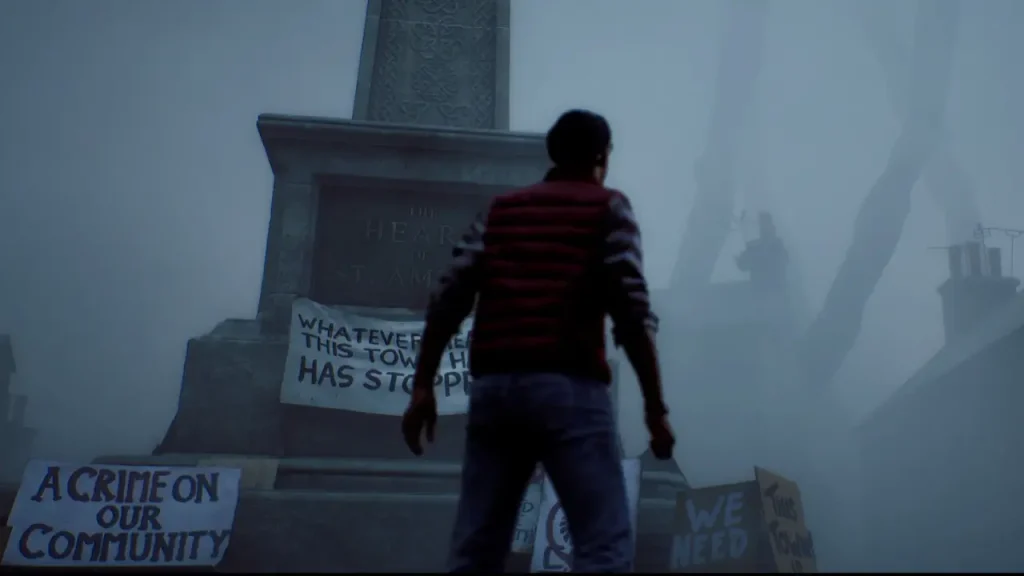

Silent Hill has been having something of a mid-life crisis lately, and honestly, I'm here for it. We got the Silent Hill 2 remake going back to the classics, Silent Hill f throwing the whole formula into Japan, and now Screen Burn has packed the series into a foggy Scottish fishing town in the 1990s. Townfall also does something the franchise has never fully committed to before: it puts you in first person, hands you a bizarre little CRT television, and basically tells you to survive by being sneaky, observant, and occasionally very good at running away. I've played the recent Silent Hill games and spent time with Townfall, and while some of its ideas are much better than others, there's enough here to make this one feel genuinely different. So, before you buy Silent Hill: Townfall and drop $49.99, let's talk about what you're actually getting for your money.
1. Townfall Is the First Full-Length First-Person Silent Hill

Let's get the obvious one out of the way first: you are now the camera.
Silent Hill: Townfall is the first full-length Silent Hill game played entirely from a first-person perspective. The series has dabbled with first person before, including Silent Hill 4: The Room and Silent Hill: The Short Message, but Townfall builds the entire experience around it.
And surprisingly, it works really well. You don't get the luxury of seeing Simon standing behind you. There's no convenient third-person camera letting you peek around a corner like you're checking whether the coast is clear at the supermarket.
If something is behind you, congratulations. You now have to listen for it. Opening a cupboard, checking a computer, reading a note, or walking into a dark hallway feels more intimate because you're actually looking through Simon's eyes. Sound becomes important too, with footsteps and environmental noises often telling you something is nearby before your eyes do.
The story follows Simon, who returns to the mysterious town of St. Amelia and starts digging into his connection to the place. Along the way, two other characters become important to the mystery:
- Simon - The protagonist trying to understand his connection to St. Amelia.
- Zoe Ellis - A nurse whose story becomes closely connected to Simon and the town.
- Richard - A mysterious figure who guides Simon deeper into the mystery through broadcasts and signals.
The first-person perspective also makes the game's smaller details much more effective. You're not watching Simon rummage through somebody's kitchen. And when something moves behind you, that suddenly becomes your problem.
That's something worth keeping in mind before you buy, because the first-person perspective isn't just a cosmetic change. It fundamentally changes how you explore St. Amelia and deal with its monsters.
2. St. Amelia Might Be Townfall's Real Main Character
The Scottish setting is easily one of the best things about Townfall. St. Amelia is a small coastal community filled with local shops, telephone boxes, homes, old advertisements, computers, and all kinds of wonderfully specific 1990s details.
Screen Burn is a Scottish studio, so the developers have a pretty obvious advantage here: they actually know what they're recreating. The result doesn't feel like someone Googled “what does Scotland look like?” five minutes before a meeting.
It feels lived in. You'll walk into houses where the furniture is still sitting around, kitchen drawers are still full, computers are still on desks, and random household junk is exactly where you'd expect it to be.
The fog makes the whole thing even better. It's obviously there to create that classic Silent Hill mystery, but it also has a neat bit of history behind it. The original Silent Hill launched on the PlayStation in 1999, and fog was used alongside the game's real-time 3D environments partly because of the hardware's limitations. The developers then turned that limited visibility into a deliberate part of the horror.
Nearly three decades later, we're still wandering around in the fog. Turns out that technical limitation had excellent branding. And because Townfall is set in Scotland, the fog doesn't even feel forced. It fits the location naturally while doing the same old Silent Hill trick: you can't see what's coming, and that's the point. If you're buying Townfall mainly for its atmosphere, this is probably the first thing to know before you buy. St. Amelia is easily one of the game's biggest strengths.
3. The 1990s Technology Isn't Just for Nostalgia

Townfall could have stopped at “look guys, it's the '90s!” and filled every room with floppy disks for nostalgia points.
Thankfully, it actually does something with them.
Old computers, floppy disks, printers, telephones, and electricity top-up cards all become part of the game's puzzles and progression. You'll have to interact with this stuff instead of simply admiring it from a distance.
And I really like that approach because the puzzles generally feel like things people might actually do. You're fixing machinery, finding information, figuring out someone's computer, or working out how a household system operates. You know, regular Tuesday activities. Except there's a horrifying creature somewhere nearby.
The old technology also fits the atmosphere perfectly. Everything feels slightly slower, more manual, and more frustrating than modern technology. Which, now that I think about it, is possibly the most terrifying thing in the entire game.
4. The CRTV Is Basically Your Weird Horror iPhone

The CRTV is Townfall's biggest gameplay gimmick, and thankfully, it's actually useful. Think of it as Silent Hill's traditional radio getting a serious upgrade and then being shoved inside a chunky 1990s television.
You can tune the CRTV to different frequencies to pick up story footage, clues, objectives, and nearby enemies. When a monster is around, tuning into its frequency can reveal where it is, giving you a chance to figure out whether you should sneak past it or prepare for a fight.
It's particularly useful because Simon isn't exactly built like a Marvel superhero.
You can also use the CRTV to understand some of the game's puzzles and environmental clues. On PS5, motion controls can even be used when tuning it, which makes the whole thing feel more physical. The only issue is that the CRTV doesn't stay equally important throughout the entire game.
As you get better at reading the environment and understanding enemy behavior, you may find yourself relying on it less. Some of its gameplay functions also become less prominent later on. So yes, it's one of Townfall's coolest ideas. Just don't expect to be glued to it for every second of the campaign. The CRTV is one of those mechanics you'll want to understand before you buy Silent Hill: Townfall, because it's a much bigger part of the game's identity than the usual Silent Hill radio.
5. The Game Really, Really Wants You to Avoid Fighting

Townfall basically looks at you and says:
“You could fight that monster. But should you?”
Usually, no.
You can sneak around enemies, hide, break line of sight, throw objects to distract them, and use the CRTV to figure out where they're moving.
This is where Townfall feels a lot like Alien: Isolation. You spend more time hiding from monsters, listening for footsteps, and figuring out when you can safely sneak past them than actually fighting. The first-person perspective makes this even more effective because you can't casually spin the camera around and inspect the entire room.
The game also gives you enough room to recover if you're spotted. Getting caught doesn't necessarily mean instant death, so encounters can remain tense without becoming a repetitive “die, reload, repeat” routine.
6. Combat Is Where Things Get a Little... Meh
Here's where I have some mixed feelings.
Townfall gives Simon wooden planks, pipes, and eventually firearms. When a monster gets close, you'll mostly block its attacks and hit it back.
And that's basically it.
The problem isn't that the combat is simple. Survival horror doesn't need Devil May Cry combat. The problem is that the enemies don't always give you enough reason to stay scared of them.
Their attack patterns are relatively straightforward, and there aren't a huge number of enemy types. Once you've figured out how a particular monster behaves, it can go from “OH GOD WHAT IS THAT?” to “Oh, it's Steve again.”
Ammo is scarce enough that you're still encouraged to avoid unnecessary fights, particularly early in the game. But once you've learned the combat system, some enemies become more of an inconvenience than a genuine threat.
That hurts the stealth system too.
The game keeps telling you that avoiding monsters is the smart thing to do, but if fighting them is easy enough, you eventually start wondering why you're crouching around like a burglar.
7. The Otherworld Goes for “Less Is More”

Townfall's Otherworld takes a surprisingly restrained approach.
Instead of immediately covering everything in rust, blood, chains, and enough industrial metal to make a Nine Inch Nails music video, it leans heavily into concrete, brutalist architecture, empty spaces, pipes, and intense red and blue lighting.
At first, it can feel almost too simple.
But give it time.
The emptiness starts working because it feels so different from the detailed homes and streets you've just been exploring. The world becomes less about gore and more about making the environment feel fundamentally wrong.
And that's where Townfall is strongest. It understands that horror doesn't always need to scream at you. Sometimes an empty hallway is enough. Sometimes it's the sound coming from the room you're absolutely not going to enter.
And sometimes you enter it anyway because apparently we never learn.
8. The Story Gets Weird, So Bring Your Detective Hat
Townfall starts with a relatively familiar Silent Hill setup: mysterious protagonist, creepy town, missing pieces of the past, and a whole lot of questions.
Then it starts getting complicated.
Simon is trying to understand his connection to St. Amelia, while Zoe's story becomes increasingly important. Richard and the other characters add more pieces to the mystery, and eventually the story expands beyond Simon's personal journey.
Don't expect everything to be explained with a nice PowerPoint presentation before the credits.
There are multiple endings, environmental clues, broadcasts, and plenty of details that you'll probably want to think about after finishing the game. In other words, you may finish Townfall and immediately open YouTube.
That's not necessarily a bad thing. Silent Hill has always enjoyed making players do a little detective work, and Townfall continues that tradition. Just don't go in expecting every mystery to have a giant arrow pointing toward the answer.
That's worth knowing before you buy, especially if you prefer horror games that explain every major mystery before the credits roll.
9. It's a 10-14 Hour Horror Trip
Townfall is relatively short.
You're looking at around 10-14 hours for the main campaign, depending on how you play. If you explore everything and move cautiously, you'll spend more time in St. Amelia. If you rush from objective to objective and don't stop to investigate every suspicious drawer, you'll finish sooner.
There are also five endings.
Three main endings are available during the first playthrough, while two secret conclusions require New Game+.
So there's some replay value here, especially if you're the type of person who finishes a Silent Hill game and immediately starts wondering:
“Okay, but what if I did THAT instead?”
And honestly, the shorter runtime works in Townfall's favor. The game has some repetitive combat and enemy encounters, and stretching those across another 10 hours probably wouldn't have done it any favors.
10. Is Silent Hill: Townfall Worth $49.99?
And now we arrive at the bit your wallet actually cares about.
At $49.99, Townfall is cheaper than most big-budget releases, but you're also getting a relatively focused 10–14 hour horror game. Marvel's Wolverine, meanwhile, is $69.99 for roughly 13–15 hours, although at least Townfall expects you to control your character instead of occasionally letting you sit back and watch Logan's motorcycle do half the work.
So, is it worth fifty bucks?
If you're buying it for the atmosphere, Scottish setting, first-person horror, puzzles, mystery, and that deliciously weird CRTV, there's plenty to like. If you're expecting a massive campaign with deep combat and dozens of enemy types, maybe keep those expectations in check.
Townfall's strongest qualities are its setting and atmosphere. Walking through a fog-covered Scottish town in first person, rummaging through lived-in homes, hearing something move nearby, checking the CRTV, and deciding whether to sneak past or risk a fight can be genuinely creepy.
Its weaker side is the combat.
Once you've figured out the enemies, some of that fear disappears, and the CRTV also becomes less important as the campaign progresses.
But at $49.99, you're at least getting a focused experience that knows what it wants to be.
Final Verdict Before You Buy
8/10
- Best for: Players who enjoy atmospheric survival horror, exploration, stealth, environmental puzzles, and Silent Hill's trademark mystery.
- Biggest drawback: Combat is simple and loses some of its tension once you learn the enemies.
- Buy it if: You want a shorter Silent Hill experience that actually tries something new.
- Think twice if: You want deep combat, tons of enemy variety, or a 30-hour campaign.
Bottom Line
Silent Hill: Townfall isn't trying to be Silent Hill 2 again, and thank God for that. We've already played that game. Instead, it takes the franchise somewhere new while keeping the things that make Silent Hill, well, Silent Hill. The fog is back. The mystery is back. The unsettling environments are back. And now you're experiencing all of it from directly behind Simon's eyes.
Sometimes you can't see the monster. Sometimes you can't understand the story. And sometimes you really shouldn't be opening that cupboard.
But that's Silent Hill.